
As Pakistan continues to experience rising temperatures, increased urbanization, and growing demand for energy-efficient infrastructure, commercial property owners are seeking advanced cooling solutions that deliver performance, reliability, and cost savings. Whether it’s a shopping mall in Lahore, a corporate office in Karachi, a hospital in Islamabad, or an industrial facility in Faisalabad, maintaining comfortable indoor temperatures has become a critical requirement for operational success.
In 2026, chillers have emerged as the preferred cooling system for commercial properties across Pakistan. Their ability to provide centralized cooling, reduce energy consumption, and support large-scale operations makes them an ideal choice for modern businesses.
At Smart Climate Solutions Pvt Ltd, we understand the unique cooling challenges faced by commercial properties in Pakistan. With increasing energy costs and the need for sustainable solutions, businesses are investing in chiller systems that offer long-term value and superior performance.
What Is a Chiller System?
A chiller is a cooling system that removes heat from a liquid through a refrigeration cycle. The chilled liquid is then circulated through air handling units or fan coil units to cool large buildings and facilities.
Unlike traditional air conditioning systems designed for smaller spaces, chillers are built to handle the cooling demands of large commercial and industrial environments.
Common applications include:
- Office buildings
- Shopping malls
- Hospitals
- Hotels
- Universities
- Manufacturing facilities
- Data centers
- Airports
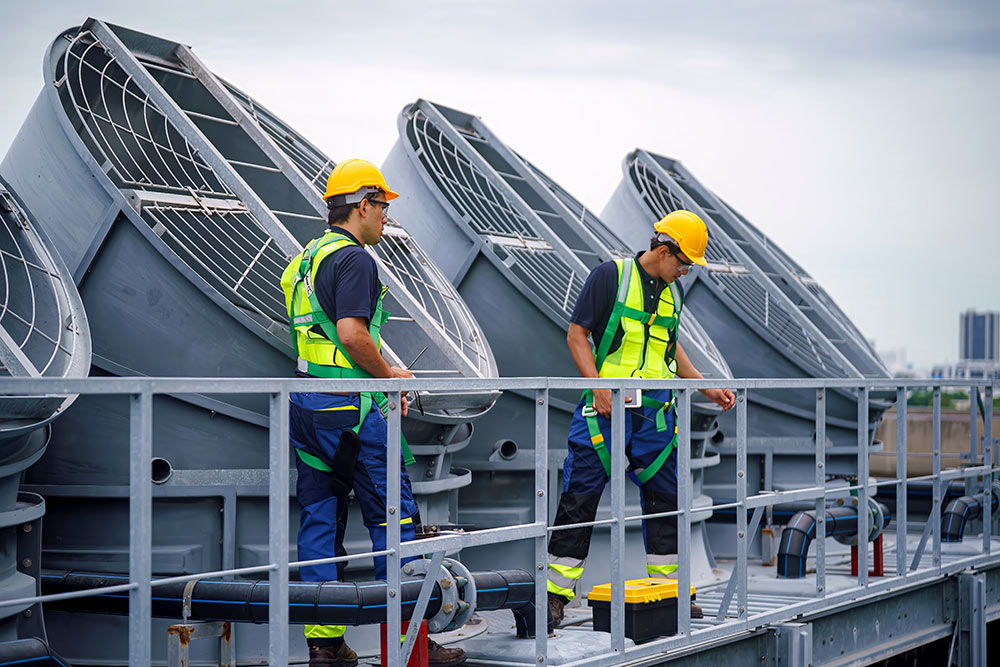
- Exceptional Energy Efficiency
One of the biggest reasons commercial property owners choose chillers is their superior energy efficiency.
Electricity costs continue to rise across Pakistan, making energy management a top priority for businesses. Modern chiller systems are designed with advanced technologies such as:
- Variable speed drives (VSDs)
- Smart controls
- High-efficiency compressors
- Automated monitoring systems
These features allow chillers to adjust cooling output according to actual demand, reducing unnecessary energy consumption.
Compared to multiple standalone air conditioning units, a centralized chiller system can significantly lower operational costs while maintaining consistent cooling performance.
For commercial properties operating around the clock, the energy savings can result in substantial long-term financial benefits.
- Ideal for Large Commercial Buildings
Commercial buildings often require cooling across multiple floors, departments, and zones.
Traditional HVAC systems may struggle to maintain uniform temperatures in large facilities. Chillers, however, are specifically designed to handle extensive cooling loads efficiently.
Benefits include:
- Uniform temperature distribution
- Better indoor comfort
- Reduced hot and cold spots
- Enhanced productivity for occupants
Whether managing a corporate headquarters, healthcare facility, or shopping complex, chillers provide reliable cooling across large areas without compromising performance.
This scalability makes them particularly valuable for Pakistan’s expanding commercial real estate sector.
- Lower Long-Term Operating Costs
Although chillers may require a higher initial investment than smaller cooling systems, they often deliver lower total ownership costs over time.
Commercial property owners benefit from:
- Reduced electricity bills
- Longer equipment lifespan
- Lower maintenance costs
- Improved operational efficiency
Many modern chillers can operate efficiently for 20 years or more when properly maintained.
Businesses that evaluate cooling systems based on lifecycle costs rather than purchase price frequently discover that chillers provide a significantly better return on investment.
As organizations seek cost-effective solutions in 2026, this financial advantage continues to drive chiller adoption across Pakistan.
- Enhanced Reliability and Performance
Downtime can be extremely costly for commercial operations.
A cooling system failure in a hospital, data center, hotel, or corporate office can disrupt business activities and negatively impact customer experiences.
Modern chiller systems are engineered for reliability and continuous operation.
Key reliability features include:
- Advanced monitoring systems
- Automated fault detection
- Redundant components
- Predictive maintenance capabilities
These features help identify potential issues before they become major problems, reducing unexpected breakdowns and improving system uptime.
For businesses that depend on uninterrupted cooling, chillers offer a dependable solution capable of supporting critical operations.
- Environmentally Friendly Cooling Solution
Sustainability has become a major priority for businesses worldwide, and Pakistan is no exception.
Many commercial organizations are working toward reducing their environmental impact and improving energy efficiency.
Modern chillers support these goals by:
- Consuming less electricity
- Reducing carbon emissions
- Utilizing environmentally friendly refrigerants
- Supporting green building initiatives
Energy-efficient cooling systems contribute to lower greenhouse gas emissions while helping businesses meet sustainability objectives.
As environmental regulations continue to evolve, investing in eco-friendly cooling technology positions businesses for future compliance and operational success.
Smart Climate Solutions Pvt Ltd helps organizations identify sustainable cooling solutions that balance environmental responsibility with business performance.
- Smart Technology Integration
The commercial cooling industry has embraced digital transformation.
In 2026, intelligent building management systems play an increasingly important role in facility operations.
Modern chillers can integrate seamlessly with:
- Building Management Systems (BMS)
- IoT-enabled monitoring platforms
- Energy management software
- Remote diagnostic systems
These smart technologies provide facility managers with real-time insights into system performance, energy consumption, and maintenance requirements.
Benefits include:
Real-Time Monitoring
Managers can track performance metrics and identify inefficiencies instantly.
Predictive Maintenance
Potential issues can be detected before equipment failures occur.
Remote Management
Cooling systems can be monitored and controlled from virtually anywhere.
Energy Optimization
Automated adjustments improve efficiency and reduce operating costs.
This level of control helps commercial property owners maximize performance while minimizing expenses.
- Flexible and Scalable for Future Growth
Commercial properties often expand over time.
A business may add new office space, increase production capacity, or renovate existing facilities.
One of the greatest advantages of chiller systems is their scalability.
Chillers can be designed to accommodate future growth without requiring a complete system replacement.
Advantages include:
- Easier facility expansion
- Increased cooling capacity when needed
- Adaptability to changing business requirements
- Better long-term infrastructure planning
For property developers and business owners, this flexibility provides valuable protection for future investments.
Rather than installing an entirely new cooling system during expansion, organizations can often enhance existing chiller infrastructure to meet evolving needs.
Why Chillers Are Particularly Suitable for Pakistan
Pakistan presents unique cooling challenges due to:
- High summer temperatures
- Extended cooling seasons
- Rapid commercial development
- Rising energy costs
- Growing demand for sustainable infrastructure
Commercial facilities require cooling solutions capable of operating efficiently under demanding environmental conditions.
Chillers address these challenges by providing:
- Consistent performance during extreme heat
- Improved energy efficiency
- Reliable large-scale cooling
- Long-term cost savings
- Adaptability to modern building requirements
As commercial real estate continues to expand across major cities such as Lahore, Karachi, Islamabad, Faisalabad, Multan, and Peshawar, chillers remain a preferred choice for developers and facility managers.
Choosing the Right Chiller System
Selecting the right chiller depends on several factors:
Building Size
Cooling requirements vary based on property dimensions and occupancy levels.
Energy Efficiency Goals
Organizations should prioritize systems that minimize energy consumption.
Budget Considerations
Evaluating lifecycle costs is essential for long-term value.
Environmental Conditions
Local climate conditions influence system performance and design requirements.
Future Expansion Plans
Scalable solutions help accommodate business growth.
Working with experienced HVAC professionals ensures proper system selection, installation, and maintenance.
Frequently Asked Questions (FAQs)
- Why are chillers better than traditional air conditioning systems for commercial buildings?
Chillers provide centralized cooling, greater energy efficiency, lower operating costs, and superior performance for large commercial properties compared to multiple standalone air conditioning units.
- How long does a commercial chiller system typically last?
A well-maintained commercial chiller can operate efficiently for 20 to 30 years, depending on system quality, usage conditions, and maintenance practices.
- Are chillers energy-efficient for businesses in Pakistan?
Yes. Modern chillers are designed with advanced technologies that optimize energy consumption, making them highly efficient and cost-effective for commercial facilities in Pakistan.
- What industries commonly use chiller systems?
Industries that frequently use chillers include healthcare, hospitality, manufacturing, retail, education, data centers, airports, and corporate office buildings.
- How can businesses choose the right chiller system?
Businesses should evaluate building size, cooling load requirements, energy efficiency goals, budget, environmental conditions, and future expansion plans while consulting experienced HVAC professionals.